

This guide explains how to approach versioning APIs on Zuplo.
The recommended versioning approach uses URL-based versioning. Read more at How to version an API.
Separate OpenAPI files
A best practice is to have separate OpenAPI files for different major versions
of an API. A single Zuplo project can have as many OpenAPI routing files as
needed. The default routes.oas.json file can be renamed, as shown here:
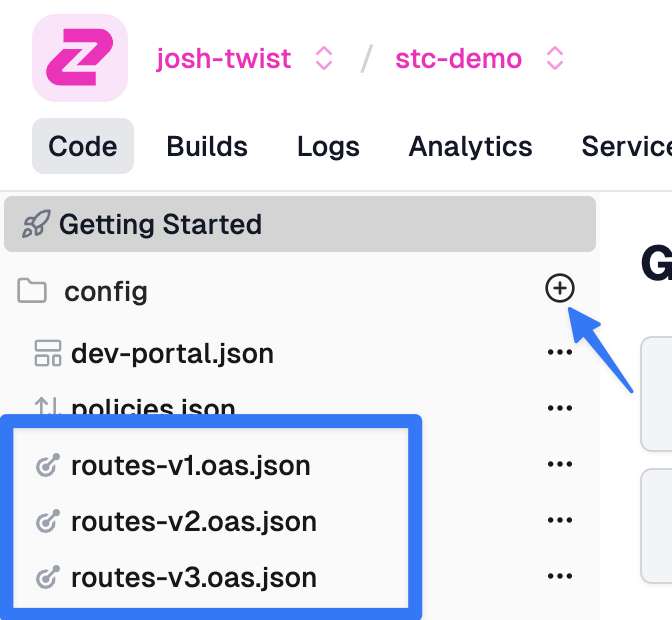
Note you can create a new OpenAPI file by clicking the '+' icon shown.
Each routing file would now have its own routes, each prefixed by /v1 and
/v2.
Also update the info properties in the OpenAPI file to include the version.
This helps users disambiguate versions in the developer portal:
Code
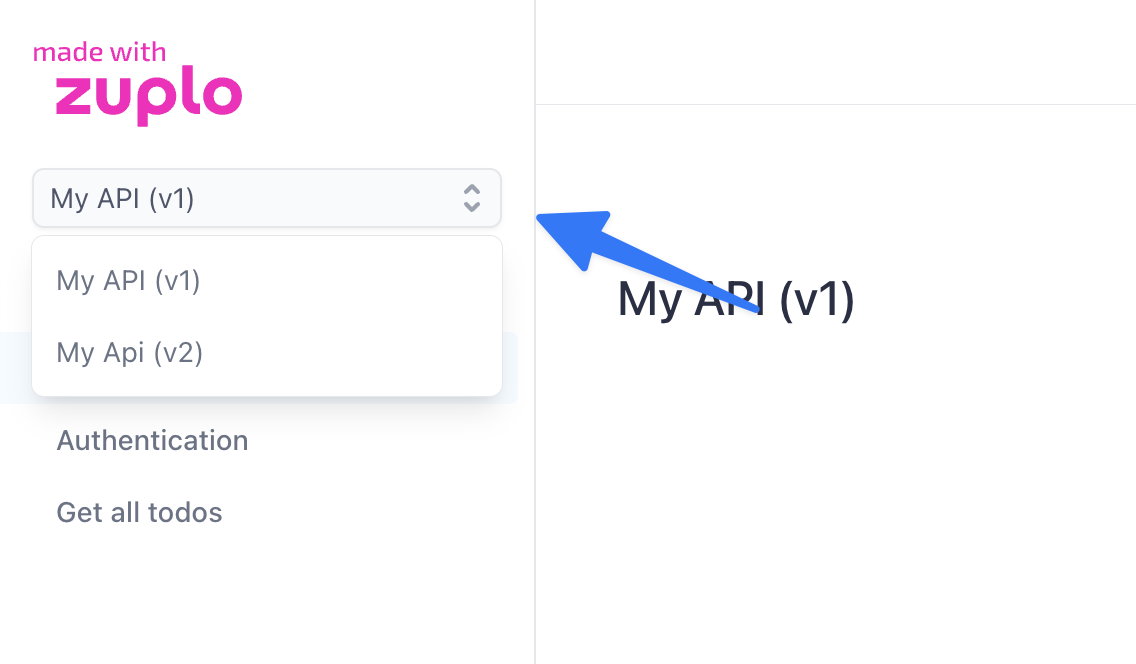
When Zuplo generates the developer portal, each OpenAPI version appears in its own document, allowing users to select the version. This is presented as a dropdown:
Using Zuplo as a versioning layer
Because Zuplo is a programmable gateway it's a powerful tool in your versioning
arsenal. For example, let's imagine you want to make a breaking change between
v1 and v2 of your todos API where the todoItems in v2 won't include a piece
of information in the previous version.
This can be entirely achieved in Zuplo by adding a v2 OpenAPI file and adding an identical route from v1 but changing the path:
/v1/todos ==> /v2/todos
The only other change you'd need to make to this new version is to add an outbound custom policy that removes the property, e.g.
Code
And QED - your Zuplo gateway is being used to update your old API and make it shiny and new.
There's a video accompaniment for this document on YouTube here: Versioning an API on Zuplo